ndia, since 2005, is a member of the Hague Convention of October 5, 1961 that abolished the requirement of legalization of foreign public documents. Apostille is acceptable in all member-countries of the Convention (For more info please visit the website: www.hcch.net). Apostille is done for personal documents like birth/death/marriage certificates, Affidavits, Power of Attorney, etc. and educational documents like degree, diploma, matriculation and secondary level certificates etc. As India is a member of the Hague Apostille Convention, 1961, no further attestation or legalization of a document apostilled by a member country, should be required for using such apostilled document in India. An apostilled document should, therefore, be treated as legalized document for all purposes in India by all concerned, in accordance with the international obligation under the Convention.
2. Normal Attestation:
This is done for all the countries which are not a member of Hague Convention and where Apostille is not accepted.
Procedure for Attestation/Apostille
A. E-sanad: A. E-sanad: e-Service for verification & attestation of documents of Indian Citizens. Detatils of e-Sanad can be obtained by following thefollowing Link.
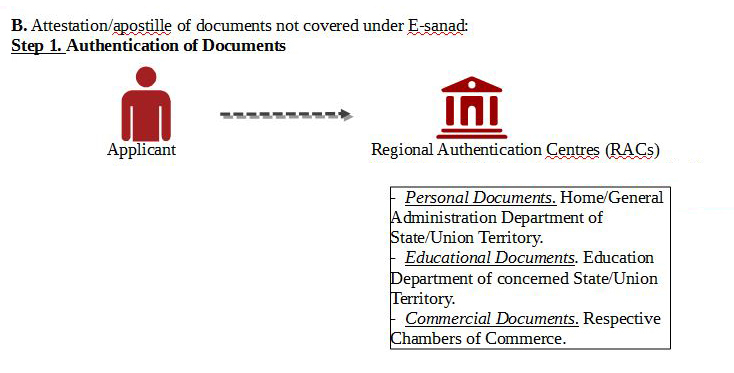
B. Attestation/apostille of documents not covered under E-sanad:
Step 1. Authentication of Documents
Applicant Regional Authentication Centres (RACs)
(Details of RACs is available at following link)
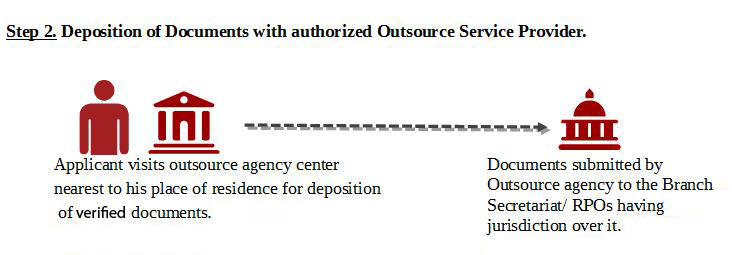
Step 2. Deposition of Documents with authorized Outsource Service Provider.
Details of Outsource Agency centers is available at following link Appendix G
Details of Jurisdiction of Branch Secretariat/RPos is available at following linkAppendix H
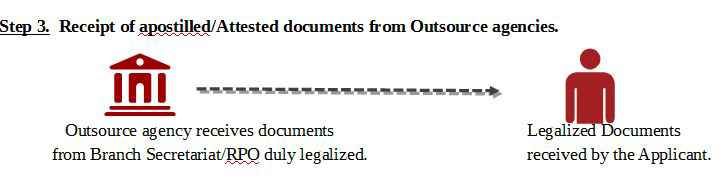
Step 3. Receipt of apostilled/Attested documents from Outsource agencies.